

MR
Mr Robert Clarke, parent
Verified
7Organic mechanisms were completely lost on my son until his IB Chemistry tutor rebuilt them from scratch. He went from a 4 to a 7 in his final exams.
IB Chemistry HL · Oxford
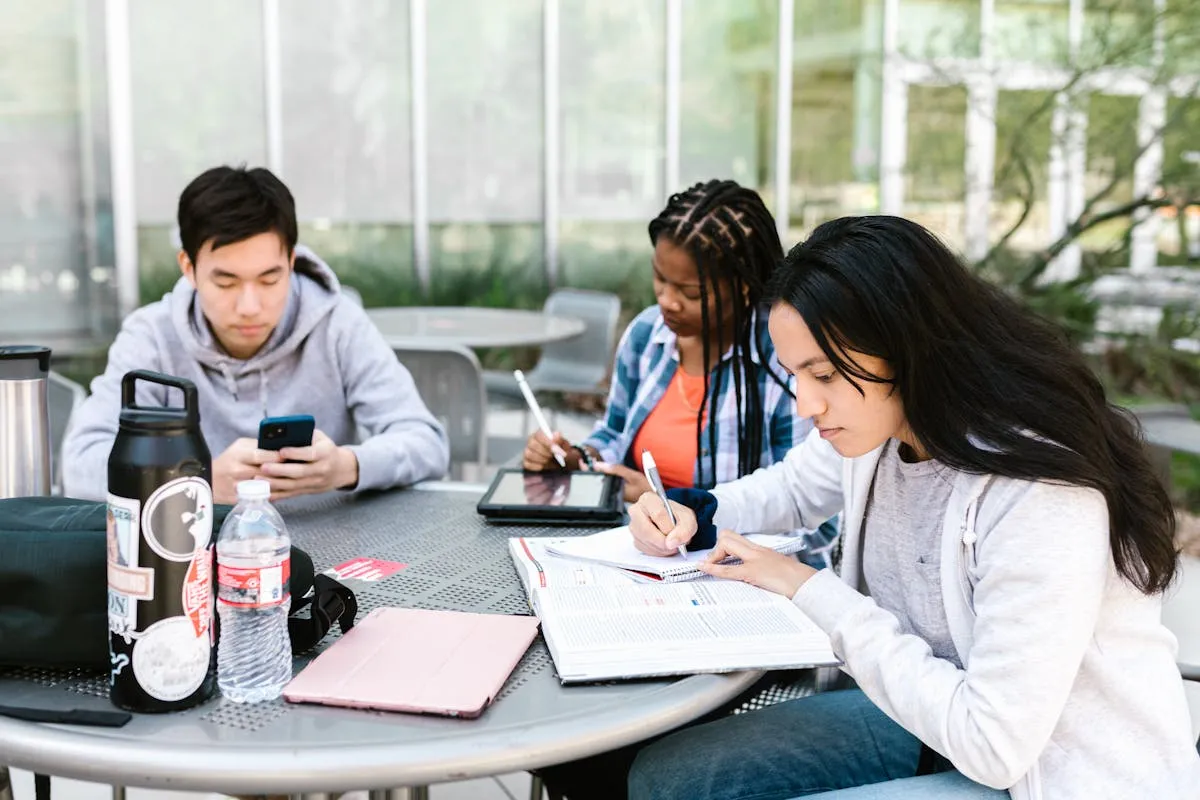
Expert 1-on-1 IB Chemistry tutoring for HL and SL. Master organic mechanisms, equilibrium, and the internal assessment — and reach Grade 6 or 7.
86%
reach Grade 6 or above
+1.8
average grade improvement
10+
years average tutor experience
Free
first lesson, no commitment
Free trial lesson
Tell us the subject, exam board and current level.
Specialist tutors with board knowledge, strong academic backgrounds, and proven grade-improvement records.
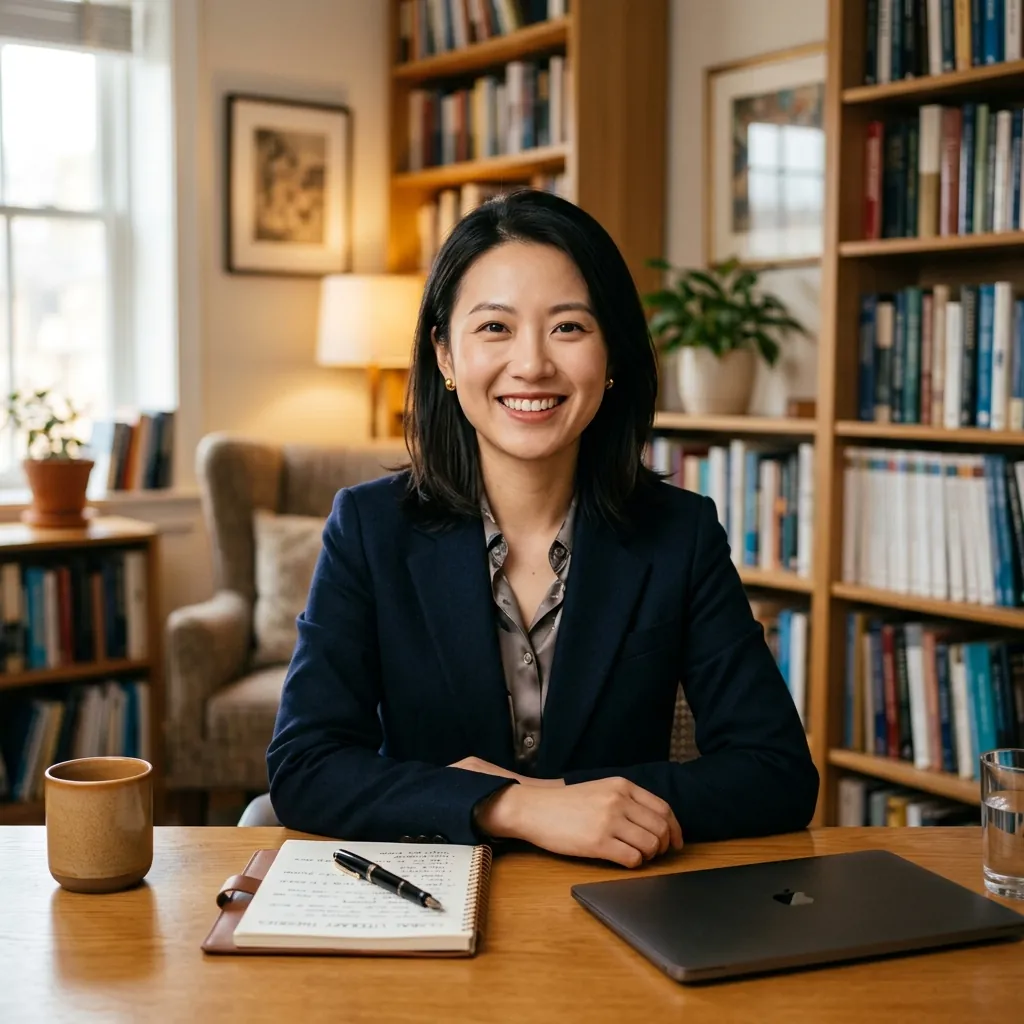
 IB Chemistry Examiner
Dr Priya Kapoor
Imperial PhD Chemistry · IB Examiner
IB Chemistry HL and SL, A-Level Chemistry (all boards)
Avg +1.9 grade improvement
 Organic Mechanisms Specialist
Mr Daniel Osei
UCL MSc Chemistry
IB Chemistry HL, organic and physical chemistry
88% of students reach Grade 6+
 IA Specialist
Ms Elena Petrov
King's College London BSc Chemistry
IB Chemistry SL and HL, IGCSE Chemistry
Internal Assessment average: 20/24
Degree-level subject specialists, many PGCE-trained, who teach to the UK exam standard.
Tutors who know the mark schemes and coach the exact phrasing that earns every mark.
Tutors complete interviews, teaching demonstrations and the academy's structured approval process before student assignments.
You are paired with a specialist in your exact board and tier — never a generalist.
Our tutors cover the new IB Chemistry syllabus (first assessed 2025) with particular focus on the calculations and mechanistic reasoning that separate Grade 6–7 students.
Step 1
We start with recent marks, confidence blockers, and the exact exam board so sessions feel personal from lesson one.
Step 2
Tutors connect concepts to examiner language, worked examples, and the habits that turn knowledge into marks.
Step 3
Parents see what changed after each session: topics covered, next steps, and the grade trajectory we are building toward.
Atomic theory, electron configuration, trends in the periodic table, ionic and covalent bonding, VSEPR, hybridisation, and intermolecular forces. The foundation for all subsequent chemistry.
Transition metals, coordination chemistry, colour and magnetism, oxidation states, and qualitative analysis. HL extends to crystal field theory and ligand substitution.
Enthalpy changes, Hess's law, bond enthalpies, entropy, Gibbs free energy, and spontaneity. Essential for predicting whether reactions proceed and in which direction.
Rate expressions, reaction mechanisms, activation energy, the equilibrium constant (Kc, Kp), Le Chatelier's principle, and acid-base equilibria (pH, Ka, buffer solutions).
Functional groups, nucleophilic substitution, electrophilic addition, condensation and hydrolysis, benzene chemistry (HL), and multi-step synthesis. Mechanisms must be drawn accurately for full marks.
Redox reactions, galvanic and electrolytic cells, standard electrode potentials, Faraday's laws, and fuel cells. Electrochemistry questions appear in both Paper 1 and Paper 2.
An individual investigation worth 20% of the final grade. We support the full process: designing a rigorous research question, writing the methodology, analysing results with appropriate statistics, and evaluating sources of error.
Atomic theory, electron configuration, trends in the periodic table, ionic and covalent bonding, VSEPR, hybridisation, and intermolecular forces. The foundation for all subsequent chemistry.
Transition metals, coordination chemistry, colour and magnetism, oxidation states, and qualitative analysis. HL extends to crystal field theory and ligand substitution.
Enthalpy changes, Hess's law, bond enthalpies, entropy, Gibbs free energy, and spontaneity. Essential for predicting whether reactions proceed and in which direction.
Rate expressions, reaction mechanisms, activation energy, the equilibrium constant (Kc, Kp), Le Chatelier's principle, and acid-base equilibria (pH, Ka, buffer solutions).
Functional groups, nucleophilic substitution, electrophilic addition, condensation and hydrolysis, benzene chemistry (HL), and multi-step synthesis. Mechanisms must be drawn accurately for full marks.
Redox reactions, galvanic and electrolytic cells, standard electrode potentials, Faraday's laws, and fuel cells. Electrochemistry questions appear in both Paper 1 and Paper 2.
An individual investigation worth 20% of the final grade. We support the full process: designing a rigorous research question, writing the methodology, analysing results with appropriate statistics, and evaluating sources of error.
See this plan built around your child's exact paper.
Book Free Demo
+1.8
average grade improvement
Mechanisms in IB Chemistry require curly arrows, correct lone pairs, charges, and named intermediates. We build each mechanism from the electron pair movement rather than from memorisation — nucleophiles attack electrophiles, leaving groups depart, pi bonds open. Students who understand the logic can draw any mechanism from first principles.
Multi-step thermodynamics and equilibrium calculations involve careful unit tracking and step-by-step logic. We practise a consistent method for each calculation type using real IB past-paper questions, addressing the most common errors: wrong sign conventions and unit conversion mistakes.
Paper 3 contains a data-based section (for all students) and HL extension questions. The data section requires interpreting unfamiliar experimental results with scientific reasoning. We practise reading experimental graphs, identifying trends, and writing evaluative responses using past Paper 3 questions.
Organic mechanisms were completely lost on my son until his IB Chemistry tutor rebuilt them from scratch. He went from a 4 to a 7 in his final exams.
The data-based section of Paper 3 was where I always lost marks. Two sessions on interpreting unfamiliar experimental data made a huge difference.
Our daughter's IA was rejected by her school teacher as insufficiently rigorous. The tutor helped her redesign it properly. She achieved a 22 on her IA.

My daughter was struggling with IB Mathematics HL and had almost given up hope of getting a 7. After just two months of weekly sessions with her ComboTutors tut...

My son started tutoring for A-Level Physics about three months before his exams. His tutor was incredibly patient and broke down complex topics like electromagn...

We needed help with GCSE Science for my son who found chemistry particularly challenging. His tutor made the sessions engaging and relatable—using real-world ex...
Join 1,200+ families
Book your free trial today.
Families usually want three things: a tutor their child respects, a plan that fits the real paper, and updates that make progress easy to follow.
We shortlist tutors who know the curriculum, teach clearly, and can coach the exact exam habits that lift marks.
Top-university academics and exam-savvy specialists.
Parents see what was covered, what improved, and what needs attention next, so progress never feels vague.
Structured feedback after every lesson block.
Sessions are matched to the student's board, tier, topic gaps, and exam timeline instead of generic subject tutoring.
Board-specific support with a measurable target grade path.
Ready to close the gaps? Start with a free demo.
Book Free DemoIB FAQ
The new syllabus (first assessed May 2025) is restructured around two themes: Structure (atomic and molecular) and Reactivity (thermodynamics, kinetics, organic, electrochemistry). The content is broadly similar but the framing is more conceptually unified. All our tutors are trained on the new syllabus.
The IA is worth 20% of the final grade. A strong, independently designed investigation with careful data collection and analysis can anchor a Grade 7 even if exam performance is slightly below. We treat the IA as a major component and invest dedicated session time in it.
Yes — the data-based section is one of the most learnable parts of IB Chemistry. We practise interpreting unfamiliar experimental results, writing precise evaluations, and responding to HL extension questions. Students who practise Paper 3 specifically tend to outperform their predictions.
IB Chemistry HL is one of the most demanding IB subjects. The HL extension covers additional organic chemistry, advanced kinetics, and transition metals. However, with systematic preparation — especially in mechanisms and calculations — Grade 6 and 7 are achievable for motivated students.
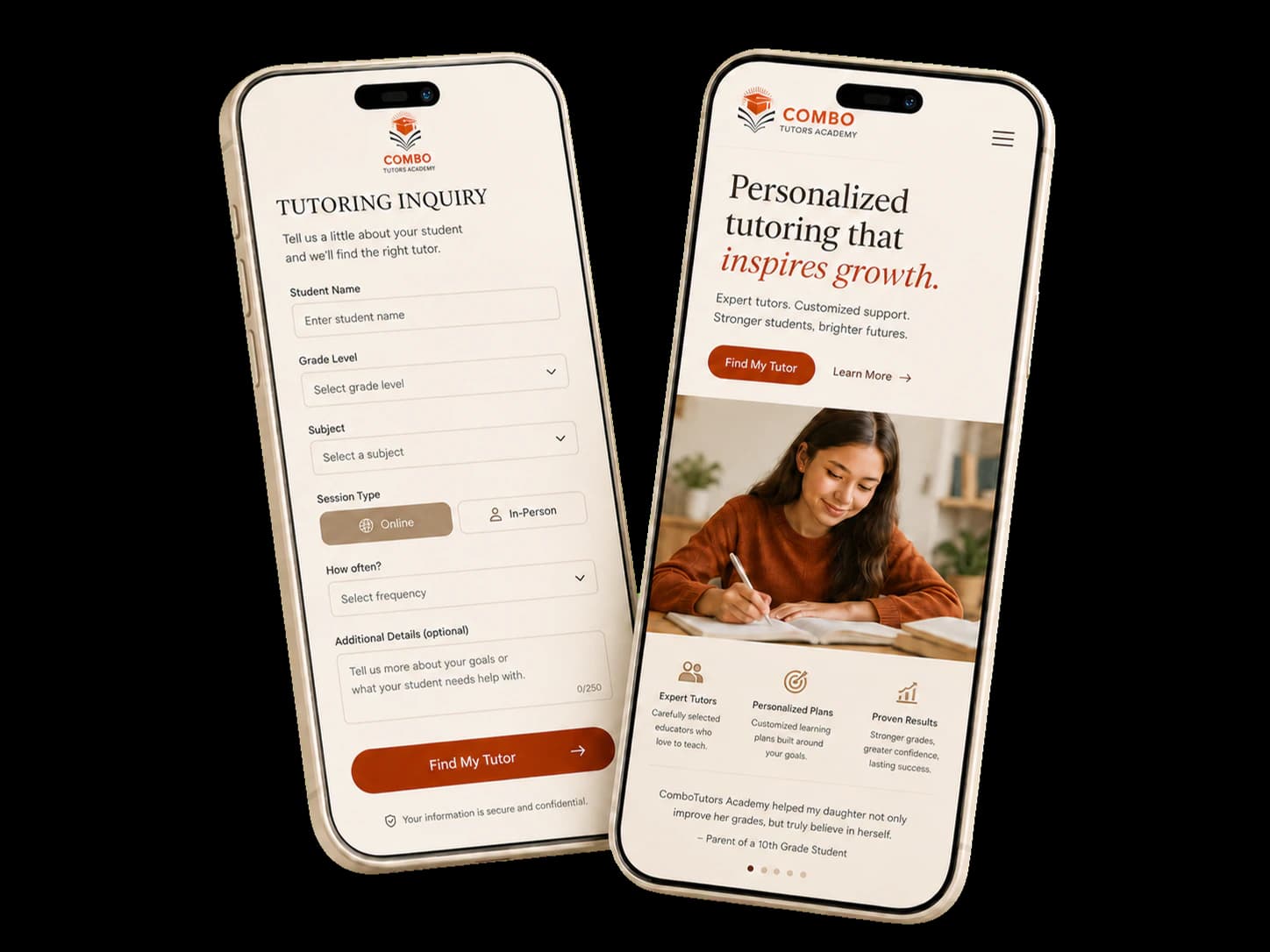
Book a free consultation and we will match you with a specialist IB Chemistry tutor who can make a real difference.